
Dr. Raju's Allergy Centre &
Multispeciality Hospital

Spirometry
Best Spirometry Test in Hyderabad at Dr. Raju's Allergy Centre & Multispeciality Hospital
What is Spirometry?
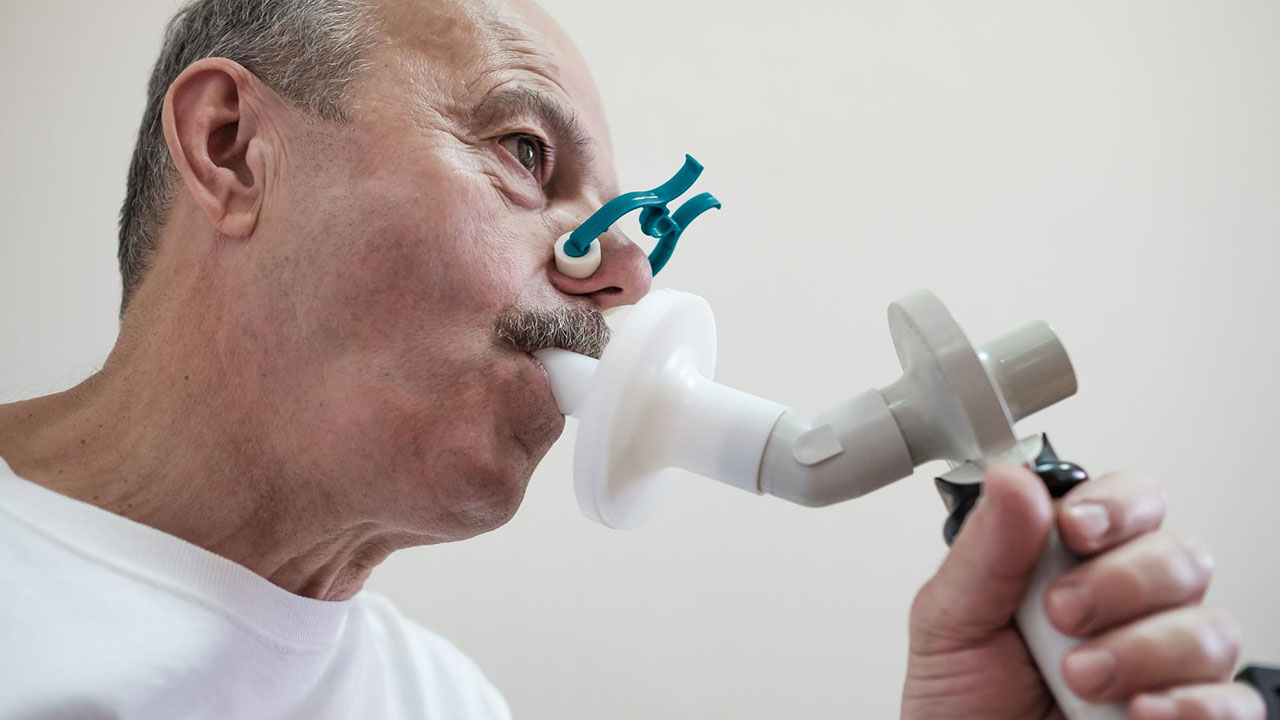
Spirometry is the most common and fundamental pulmonary function test. It measures how much air you can breathe out and how quickly you can exhale it. This simple, non-invasive test provides essential information about lung function and is a cornerstone in diagnosing and managing respiratory conditions.
The test involves taking a deep breath and then exhaling forcefully and rapidly into a mouthpiece connected to a device called a spirometer. The spirometer records both the volume of air exhaled and the flow rate, generating graphs and numerical values that help doctors assess lung health. Spirometry is painless, requires minimal effort, and typically takes only 30–45 minutes to complete.
At Dr. Raju's Allergy Centre, we perform comprehensive spirometry testing using state-of-the-art equipment to evaluate patients with respiratory symptoms, monitor known lung conditions, and assess response to treatment. Our experienced technicians guide patients through each maneuver to ensure accurate, reproducible results.
Why is Spirometry Important?
- Accurate Diagnosis: Differentiates obstructive diseases (asthma, COPD) from restrictive conditions
- Early Detection: Identifies abnormalities before symptoms become severe
- Disease Severity Assessment: Quantifies impairment
- Treatment Monitoring: Tracks progression and medication response
- Pre-Operative Evaluation: Assesses surgical risk
- Occupational Screening: Monitors workers exposed to respiratory hazards
- Disability Evaluation: Provides objective data
Common Indications for Spirometry
- Unexplained shortness of breath or difficulty breathing
- Chronic cough (lasting more than 3 weeks)
- Wheezing or chest tightness, excessive mucus production
- Decreased exercise tolerance
- Known respiratory condition (asthma, COPD) requiring monitoring
- Pre-operative assessment, occupational lung hazards
- Monitoring medication effects, pulmonary rehabilitation response
- Screening in high-risk individuals (smokers, occupational exposures)
How Does Spirometry Work?
The Procedure: You are seated with a nose clip; lips seal around a sterile mouthpiece; normal breathing first; then deepest breath possible; forced exhalation as fast and complete as possible (typically 6+ seconds); repeated at least 3 times. Bronchodilator testing may follow (repeat after 15–20 minutes).
Key Measurements
| Measurement | What It Means | Clinical Significance |
|---|---|---|
| FVC (Forced Vital Capacity) | Total air exhaled during forced expiration | Decreased in restrictive and obstructive diseases |
| FEV1 (Forced Expiratory Volume in 1 Second) | Air exhaled in first second | Decreased in obstruction; key for severity grading |
| FEV1/FVC Ratio | Proportion exhaled in one second | Reduced (<0.7 or <LLN) indicates obstruction |
| PEF (Peak Expiratory Flow) | Maximum speed of expiration | Decreased in obstruction; useful for asthma monitoring |
| FEF 25–75% | Flow during middle half of expiration | Sensitive for small airway disease |
| FET (Forced Expiratory Time) | Time to complete forced expiration | Prolonged in obstruction |
Understanding Spirometry Results
Results are compared to predicted values (age, height, sex, ethnicity). Modern guidelines recommend z-scores for accurate interpretation.
Obstructive Pattern
| Parameter | Finding |
|---|---|
| FEV1/FVC Ratio | Decreased (below LLN or <0.7) |
| FVC | Normal or mildly decreased |
| FEV1 | Decreased |
| Typical Conditions | Asthma, COPD, bronchiectasis |
Restrictive Pattern
| Parameter | Finding |
|---|---|
| FEV1/FVC Ratio | Normal or increased |
| FVC | Decreased |
| FEV1 | Decreased proportionally to FVC |
| Typical Conditions | Pulmonary fibrosis, chest wall deformities, obesity, neuromuscular weakness |
Mixed Pattern
| Parameter | Finding |
|---|---|
| FEV1/FVC Ratio | Decreased |
| FVC | Decreased |
| Typical Conditions | COPD with restriction, silicosis |
Severity Classification (Based on FEV1)
| Severity | FEV1 (% Predicted) |
|---|---|
| Mild | ≥ 70% |
| Moderate | 60–69% |
| Moderately Severe | 50–59% |
| Severe | 35–49% |
| Very Severe | < 35% |
Note: ATS/ERS and GOLD guidelines may use slightly different classifications.
Bronchodilator Responsiveness: Significant response = FEV1 and/or FVC increase ≥12% AND ≥200 mL from baseline. Positive response suggests asthma or asthmatic component in COPD.
How to Prepare for Spirometry
Medication Adjustments: Short-acting bronchodilators: withhold 4–6 hours; long-acting: 12–24 hours; combination inhalers as directed. Do not stop any medication without doctor's instructions.
Before the Test: Avoid heavy meals, smoking (4–6 hours), caffeine, alcohol (4 hours), strenuous exercise (30 min); wear loose clothing.
What to Bring: Doctor's referral, insurance information, previous results, medication list, questions for the doctor.
What to Expect During the Test
Seated comfortably; nose clip; sterile mouthpiece; technician demonstrates and guides; 3–8 attempts with rest periods. Session: 30–45 minutes. You may feel temporary shortness of breath, lightheadedness, mild discomfort, or coughing. Tips: Listen to instructions; give maximum effort; tight mouthpiece seal; continue exhaling until told to stop.
Who Should Not Have Spirometry?
Relative Contraindications: Recent heart attack, uncontrolled hypertension, recent eye/chest/abdominal surgery (4 weeks), pneumothorax, aortic aneurysm, active respiratory infection, hemoptysis, recent stroke, confusion or inability to follow instructions.
Potential Risks: Temporary shortness of breath, lightheadedness, coughing, minor discomfort; extremely rare: fainting, cardiac events. Discuss concerns with your doctor before the test.
Spirometry vs. Peak Flow Monitoring
| Feature | Spirometry | Peak Flow Meter |
|---|---|---|
| Setting | Performed in clinic | Home monitoring |
| Measurements | FVC, FEV1, FEV1/FVC, flows | PEF only |
| Accuracy | High, calibrated equipment | Variable, technique-dependent |
| Purpose | Diagnosis, monitoring | Daily asthma monitoring |
| Frequency | As needed | Daily or twice daily |
| Interpretation | By specialist | Patient or doctor |
Why Choose Dr. Raju's Allergy Centre for Spirometry?
- Specialised Expertise: Deep understanding of respiratory physiology and interpretation
- State-of-the-Art Equipment: Advanced systems calibrated daily
- Experienced Technicians: Skilled personnel for high-quality, reproducible results
- Child-Friendly Approach: Testing children 5–6 years and older
- Bronchodilator Testing: Pre- and post-bronchodilator studies
- Integrated Care: Results inform treatment for asthma, COPD, and other conditions
- Clear Communication: Results explained with practical guidance
Spirometry in Children
Spirometry can be performed in children 5–6 years and older with appropriate coaching. Tips: Age-appropriate explanations, technician demonstration, visual incentives (blowing candles), shorter sessions, parental presence, emphasis on effort. Indications: Asthma evaluation, chronic cough, exercise intolerance, suspected lung disease, monitoring chronic conditions.
Frequently Asked Questions
Is spirometry painful? No. Mild discomfort possible; generally well-tolerated.
How long? 30–45 minutes; add 15–20 min if bronchodilator testing.
Referral? Yes. Bring prescription or referral.
Medications? Some bronchodilators may need to be withheld; doctor will advise.
How often? Asthma: annually or with symptom changes; COPD: annually; pre-op and occupational as scheduled.
Eat before? Avoid heavy meals 2–3 hours before.
Cannot perform maneuver? Technician provides coaching; alternative protocols may be available.
Insurance? Most plans cover medically necessary spirometry.
Diagnose all lung diseases? Excellent for obstructive and suggestive of restriction; full PFT may be needed for comprehensive evaluation.
Conditions Diagnosed or Monitored
- Asthma, COPD, Bronchiectasis, Cystic Fibrosis
- Interstitial Lung Disease, Neuromuscular Disorders
- Pre-operative assessment, Occupational lung disease
After Your Spirometry: Next Steps
Dr. Raju CH will: review results; identify obstructive, restrictive, or mixed patterns; assess severity; evaluate bronchodilator response; correlate with symptoms; develop a treatment plan; recommend additional testing if needed; schedule follow-up.
"Spirometry is the window into lung function. This simple, non-invasive test provides essential information that guides diagnosis, treatment, and monitoring of respiratory conditions. When performed correctly and interpreted by an experienced specialist, spirometry is an invaluable tool in helping patients breathe easier and live better."
Ready to Assess Your Lung Function?
If you have respiratory symptoms or a known lung condition requiring evaluation, expert help is just a call away. Dr. Raju CH provides comprehensive spirometry testing with accurate interpretation and personalised treatment planning.
Email: info@drrajuchesthospital.com | Plot No. 10, Beside Vivid Diagnostics, Chandanagar, Hyderabad - 500050