
Dr. Raju's Allergy Centre &
Multispeciality Hospital

Allergy Testing (Skin Prick Test)
Best Allergy Testing in Hyderabad at Dr. Raju's Allergy Centre & Multispeciality Hospital
What is Allergy Testing?
Allergy testing is a diagnostic process used to identify specific substances (allergens) that trigger an individual's allergic reactions. These tests help determine what a person is allergic to, guiding effective treatment and avoidance strategies. At Dr. Raju's Allergy Centre, we offer comprehensive allergy testing to pinpoint the exact causes of your symptoms, whether they are respiratory, skin, or food-related.
Allergy testing works by exposing the body to tiny amounts of suspected allergens in a controlled manner and observing the immune system's response. When a person is allergic to a substance, their immune system produces Immunoglobulin E (IgE) antibodies against that allergen. During testing, exposure to that allergen triggers a small, localised allergic reaction, confirming sensitivity.
The two most common methods of allergy testing are skin prick testing and specific IgE blood testing. Skin prick testing is often preferred because it provides rapid results, is highly sensitive, and allows testing for multiple allergens in a single session.
Why is Allergy Testing Important?
Accurate allergy testing is the foundation of effective allergy management. Without knowing the specific triggers, treatment becomes a process of trial and error, and avoidance measures may be ineffective or unnecessarily restrictive. Allergy testing provides:
- Precise Identification: Pinpoints exactly which allergens are causing your symptoms, allowing targeted treatment
- Personalised Treatment Plans: Enables development of customised strategies including allergen avoidance, medication selection, and immunotherapy
- Confirmation of Suspected Triggers: Validates or rules out suspected causes based on history
- Peace of Mind: Reduces anxiety by providing clear answers about what to avoid
- Monitoring Disease Progression: Repeat testing can track changes in sensitivity over time
- Guiding Immunotherapy: Essential before starting allergy shots to ensure the correct allergens are included
Common Conditions That May Require Allergy Testing
- Allergic Rhinitis (Hay Fever): Persistent sneezing, runny nose, nasal congestion
- Allergic Asthma: Wheezing, coughing, shortness of breath triggered by allergens
- Atopic Dermatitis (Eczema): Chronic itchy skin rashes
- Food Allergies: Reactions after eating specific foods
- Drug Allergies: Suspected reactions to medications
- Insect Sting Allergies: Severe reactions to bee, wasp, or ant stings
- Occupational Allergies: Symptoms related to workplace exposures
- Urticaria (Hives): Recurrent unexplained hives
- Anaphylaxis: Unexplained severe allergic reactions
Types of Allergy Testing Available
1. Skin Prick Test (SPT) – The Gold Standard
Skin prick testing is the most common and preferred method for diagnosing environmental and food allergies. It is quick, minimally invasive, and provides results within 20 minutes.
How It Works:
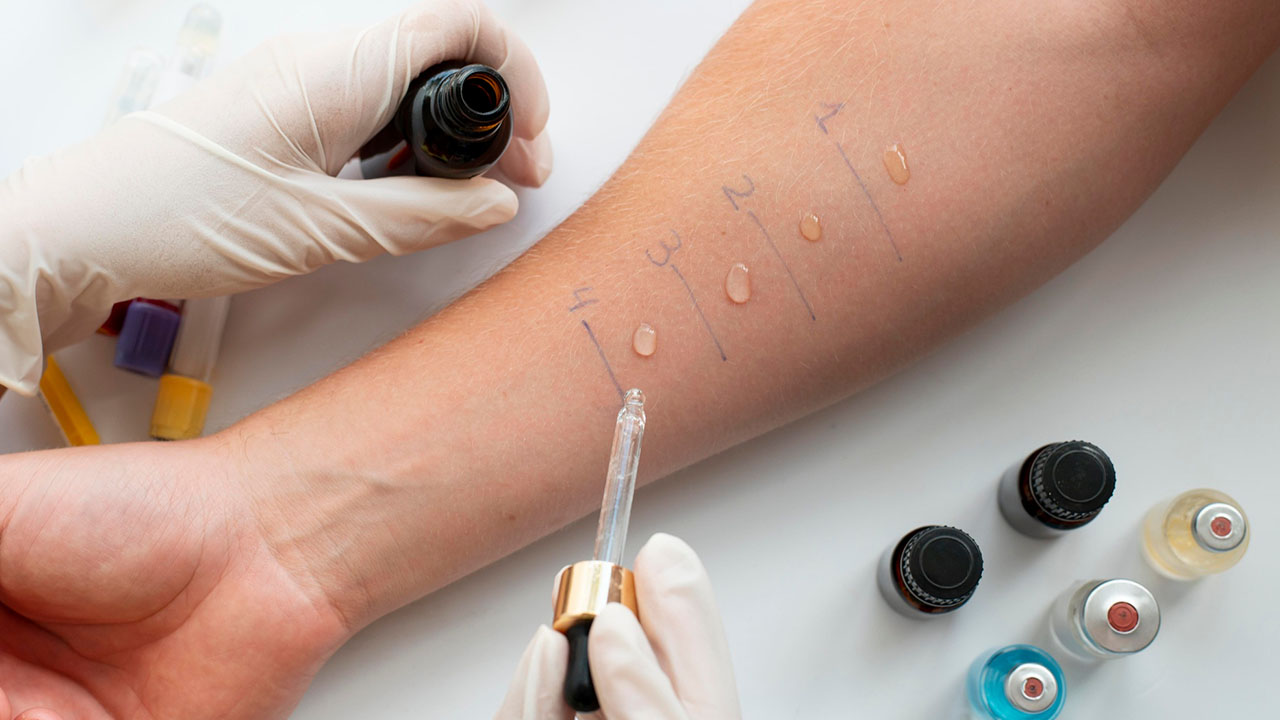
- Small drops of allergen extracts are placed on the forearm or back
- A sterile lancet pricks the skin through each drop, allowing a tiny amount of allergen to enter the superficial skin layer
- If allergic, a small raised bump (wheal) with surrounding redness (flare) develops within 15–20 minutes
- The size of the wheal is measured and compared to positive (histamine) and negative (saline) controls
Allergens Commonly Tested: Inhalants (pollens, dust mites, mould, pet dander, cockroach); Foods (milk, egg, peanut, tree nuts, wheat, soy, fish, shellfish, sesame); Insect venoms (honeybee, wasp, yellow jacket, hornet); Medications (penicillin); Latex
Advantages: Results in 15–20 minutes; highly sensitive and specific; dozens of allergens in one session; less expensive than blood tests; patient can see the reaction
Limitations: Antihistamines must be stopped 3–7 days before; may not suit severe eczema or dermatographism; very small risk of systemic reaction (<1 in 10,000)
2. Specific IgE Blood Testing (ImmunoCAP)
Blood tests measure IgE antibodies specific to particular allergens in the blood.
How It Works: Blood sample is drawn and sent to the laboratory; the sample is exposed to allergens and the amount of IgE bound to each allergen is measured; results reported as numerical values.
Advantages: Not affected by antihistamines or skin conditions; single draw for many allergens; useful when skin testing cannot be performed; quantitative measure
Limitations: Results take several days; more expensive; slightly less sensitive for some allergens; positive result may not always correlate with clinical symptoms
3. Component-Resolved Diagnostics (CRD)
Advanced blood testing that measures IgE to specific proteins within an allergen, providing detailed information about the nature and potential severity of allergy.
Clinical Utility: Distinguishes true peanut allergy from pollen cross-reactivity; predicts risk of severe reaction; helps determine likelihood of outgrowing an allergy; guides immunotherapy decisions
4. Patch Testing
Specialised testing for delayed-type allergic reactions, primarily used for contact dermatitis. Allergens are applied under adhesive patches on the back for 48 hours; readings at 48 and 72–96 hours. Common uses: contact dermatitis from cosmetics, metals, fragrances; occupational skin allergies.
What to Expect During Skin Prick Testing
Before the Test: Antihistamines must be stopped 3–7 days before (your doctor will advise). Discuss all medications. Test area should be free of rash, sunburn, or excessive hair.
During the Test: You will be seated comfortably; skin is cleaned and marked; drops placed and pricked—mild discomfort similar to a light scratch; after 15–20 minutes, sites are examined and measured.
After the Test: Results explained immediately; itching typically subsides within 30–60 minutes; you can resume antihistamines after testing.
Interpreting Results: Positive: wheal 3mm or larger (after subtracting negative control) indicates sensitisation. Negative: no reaction suggests allergy unlikely. Positive tests must be interpreted with clinical history.
Why Choose Dr. Raju's Allergy Centre for Allergy Testing?
- Specialised Expertise: Deep understanding of allergy mechanisms and test interpretation
- Comprehensive Testing Options: Skin prick, IgE blood tests, CRD, patch testing
- Extensive Allergen Panels: Inhalant, food, venom, and contact allergens relevant to our region
- Child-Friendly Approach: Experienced in testing children of all ages
- Safe Testing Environment: Emergency equipment and medications immediately available
- Rapid Results: Skin test results within 20 minutes
- Integrated Care: Results inform personalised treatment plans and immunotherapy
Preparing for Your Allergy Test
Medications to Avoid Before Skin Prick Testing
| Medication Type | Washout Period |
|---|---|
| Short-acting antihistamines (cetirizine, levocetirizine, fexofenadine, loratadine) | 3–5 days |
| Long-acting antihistamines (hydroxyzine) | 5–7 days |
| Tricyclic antidepressants (amitriptyline, nortriptyline) | 7–14 days |
| Sleep aids containing antihistamines (diphenhydramine, doxylamine) | 3–5 days |
| Heartburn medications (cimetidine, ranitidine – H2 blockers) | 24 hours |
| Oral corticosteroids (prednisone) | May suppress skin reactivity; discuss with doctor |
Medications That Usually Do NOT Interfere: Inhaled corticosteroids, nasal corticosteroid sprays, leukotriene modifiers (montelukast), beta-agonists (albuterol), theophylline, most blood pressure medications.
What to Bring: List of current medications, list of suspected triggers, previous allergy test results (if any), insurance information, list of questions for the doctor.
Potential Risks and Limitations
Skin Prick Testing Risks: Mild itching at positive sites (resolves in 30–60 min); rare fainting (usually anxiety-related); extremely rare systemic reaction (<1 in 10,000); false positives require correlation with history; false negatives may require additional testing.
Blood Testing Limitations: Results not immediate; positive results indicate sensitisation but may not predict severity; higher cost than skin testing.
Frequently Asked Questions About Allergy Testing
Is allergy testing painful? Minimal discomfort—most describe it as a mild scratch or pinprick. Itching from positive reactions is temporary.
How long does the test take? Typically 45–60 minutes: 15 min preparation, 20 min for reactions, 15–20 min for measurement and discussion.
Can children be tested? Yes, safe for all ages including infants. We use age-appropriate, child-friendly techniques.
Can I test for multiple allergies at once? Yes, skin prick testing can evaluate dozens of allergens; common panels include 30–40 allergens plus controls.
How accurate is allergy testing? Approximately 85–95% sensitive and specific when performed and interpreted correctly.
What if my test is positive but I've never reacted to that food? Sensitisation without clinical reactivity is common for foods. Further evaluation, including oral food challenge, may be needed.
Do I need to stop my asthma medications? No. Inhaled corticosteroids and bronchodilators do not interfere and should be continued.
After Your Allergy Test: Next Steps
Following testing, Dr. Raju CH will: review results in context of your symptoms; provide avoidance guidance; discuss treatment options (medications, immunotherapy, emergency plans); recommend follow-up testing when appropriate; coordinate with other providers as needed.
"Accurate allergy testing is the cornerstone of effective allergy management. Knowing exactly what triggers your symptoms transforms treatment from guesswork to precision medicine. Whether you suffer from seasonal allergies, food reactions, or unexplained hives, proper testing provides the answers you need to take control of your health."
Ready to Identify Your Allergy Triggers?
If you suffer from persistent allergic symptoms and want to identify the exact causes, expert help is just a call away. Dr. Raju CH provides comprehensive allergy testing with rapid results and personalised treatment planning.
Email: info@drrajuchesthospital.com | Plot No. 10, Beside Vivid Diagnostics, Chandanagar, Hyderabad - 500050